The Red Sea Destination: 2026 Facts and Figures

In Focus <

From geography and hospitality to the environment, energy and people: the figures behind The Red Sea destination and the future it is building.

By: SAFAR Editorial Team

The Red Sea Destination at a Glance:

  • The Red Sea destination covers 28,000 square kilometres, with more than 90 islands and a 200-kilometre coastline.
  • On completion, the destination aims to offer 50 hotels, 8,000 hotel rooms and 1,000 residential properties.
  • The source describes a destination powered by renewable energy through 760,500 solar panels, with battery storage capacity exceeding 1,200 MW/hour.
  • Conservation programmes include a target of planting 50 million mangrove trees by 2030, limiting development to 22 islands and a planned cap of one million visitors a year.
  • The figures are drawn from the supplied SAFAR Magazine document; dates and descriptions follow their respective passages in the source.
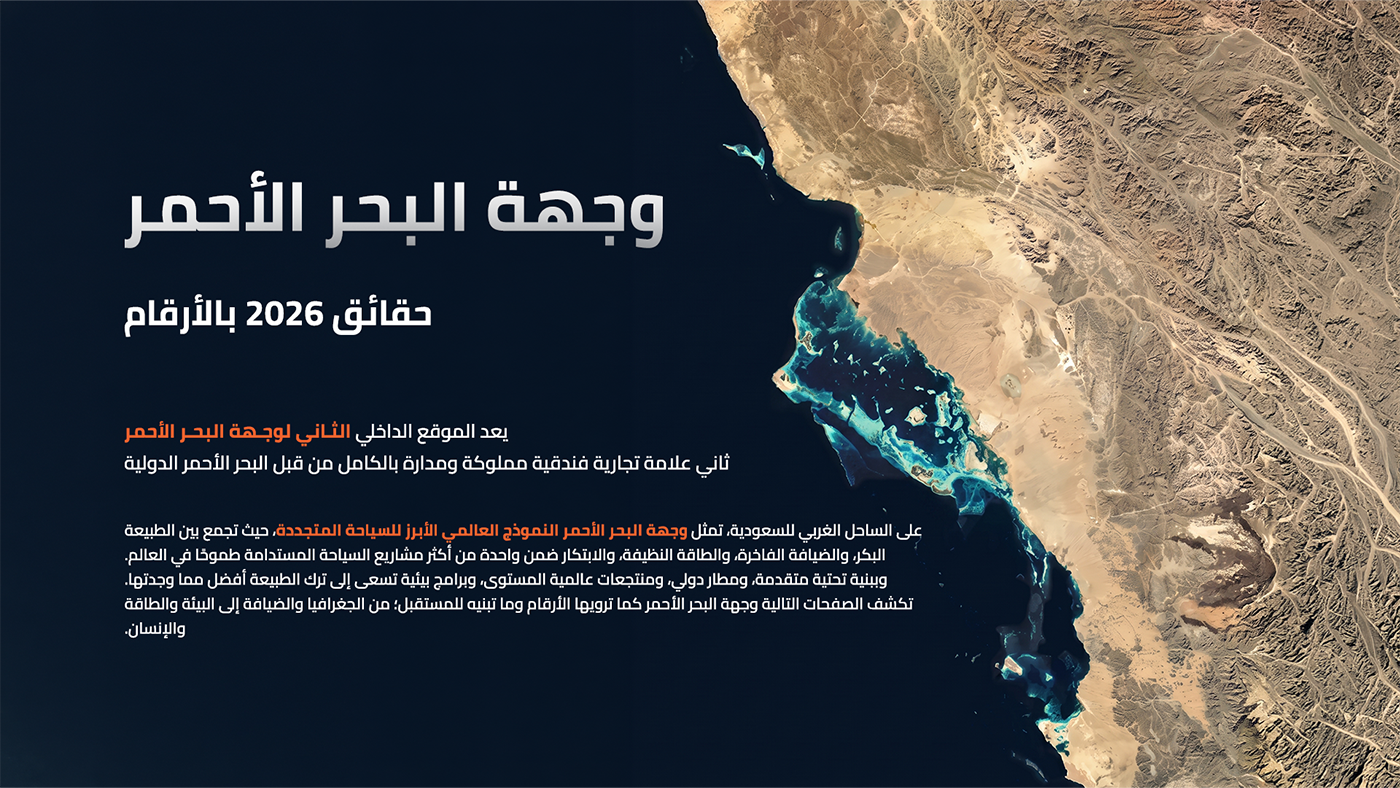
The Red Sea destination and a map of the Saudi coastline — 2026 facts and figures
The Red Sea Destination: 2026 Facts and Figures.

On Saudi Arabia’s western coast, The Red Sea destination represents the world’s leading model for regenerative tourism, bringing together pristine nature, luxury hospitality, clean energy and innovation in one of the world’s most ambitious sustainable tourism projects.

It also brings together advanced infrastructure, an international airport, world-class resorts and environmental programmes that aim to leave nature better than they found it.

The following sections explore The Red Sea through its figures and the future it is building, from geography and hospitality to the environment, energy and people.

The Red Sea Destination in Numbers

  • 28,000 square kilometres: The destination’s total area.
  • More than 90 islands: Pristine islands.
  • 200 kilometres: Of unspoilt coastline.
  • 760,500 solar panels: Powering the destination with renewable energy.
  • 1,200 megawatts per hour: Battery storage capacity shown in the main facts and figures panel.
  • 50 million mangrove trees: Targeted for planting.
  • SAR 93.7 billion: Across 24,436 contracts as of June 2026, according to the main facts and figures panel.
  • 35,000 direct jobs: For Saudi nationals.
  • More than 1,000 Saudi graduates: From training programmes.
  • 16 world-class resorts: In the first phase.
  • 98,000 coral fragments: Relocated for their protection.
  • 160 electric vehicle charging points: Powered by solar energy.
  • The world’s first solar-powered 5G network.
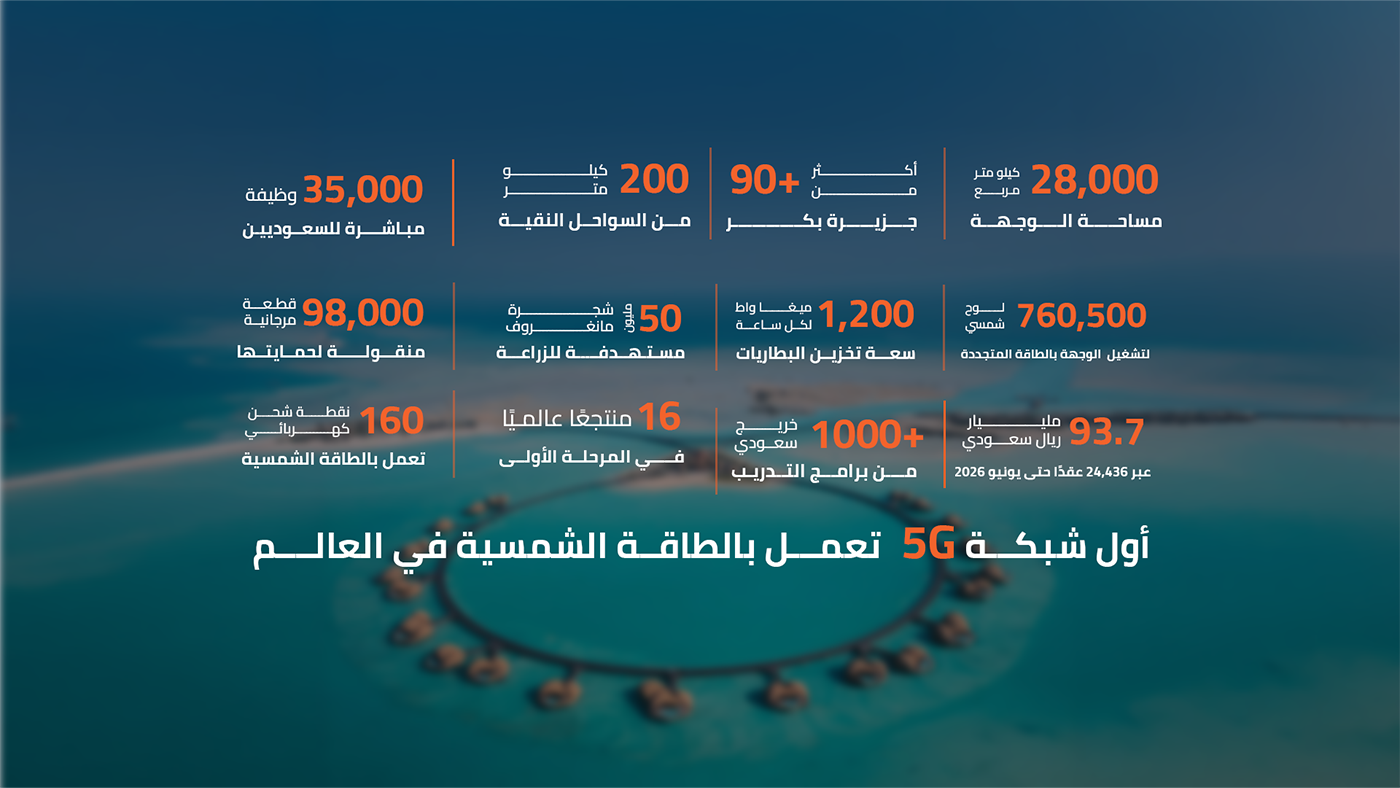
The Red Sea destination's key figures: area, islands, energy and employment
Key figures as presented in the source’s main facts and figures panel.

The Red Sea Destination Towards 2030

What we see today is not the destination’s final form. As development phases are completed, its hospitality and accommodation offering will expand across the islands and inland sites, alongside its economic impact and the employment opportunities it supports.

On Completion: Hospitality and Accommodation

  • 50 hotels.
  • 8,000 hotel rooms.
  • 1,000 residential properties.

Economic Impact

  • SAR 22 billion: Expected contribution to GDP.
  • 35,000 direct jobs.
  • 35,000 indirect jobs.

The Geography of The Red Sea Destination

  • The destination covers 28,000 square kilometres.
  • Its coastline stretches for 200 kilometres.
  • It lies north of Jeddah, at a distance of 500 kilometres.
  • It extends between Al Wajh and Umluj.
  • Its archipelago comprises more than 90 islands.
  • Approximately 85% of the world’s population can reach it within around 8 hours of flying time.
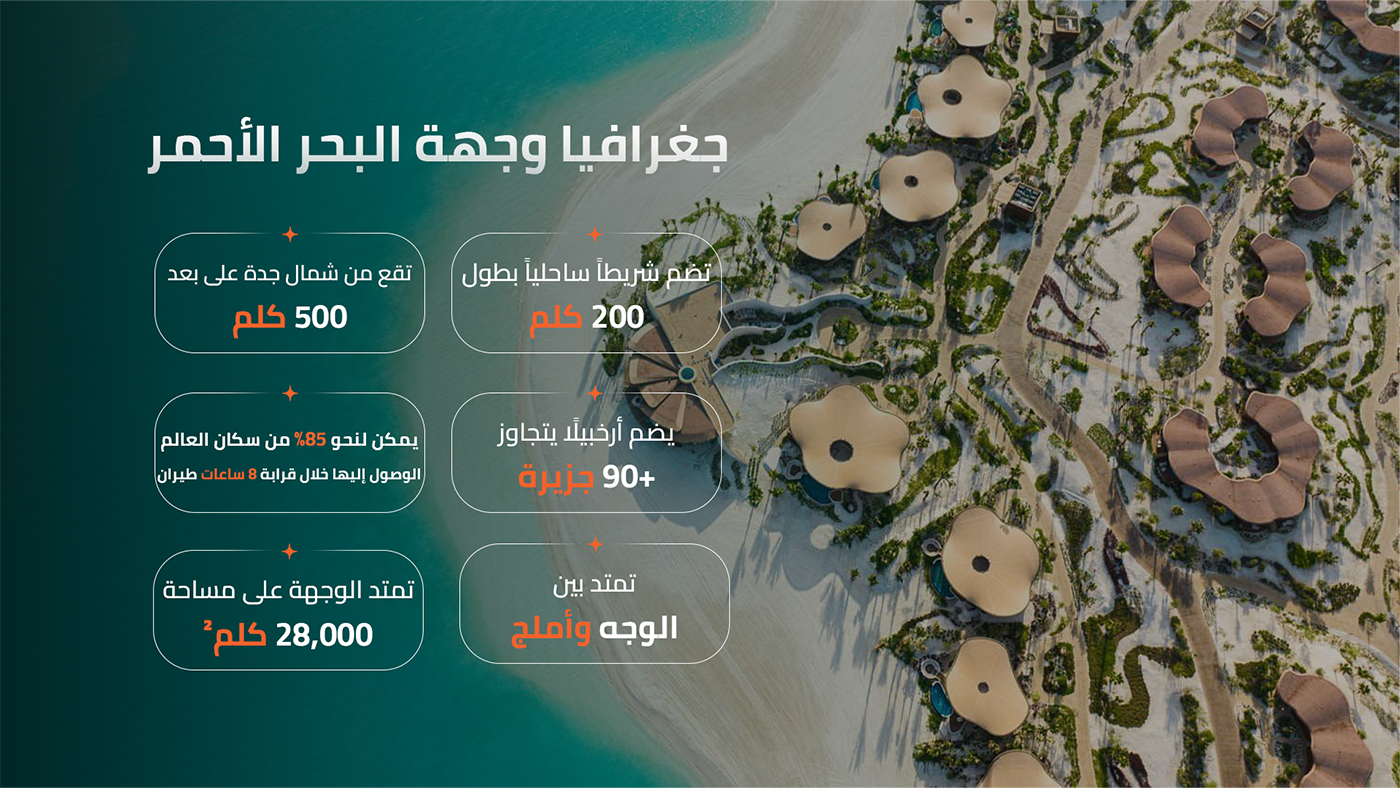
The Red Sea destination's geography, area and location between Al Wajh and Umluj
The geography of The Red Sea destination in numbers.

The islands are scattered like pearls across the sea, some still untouched by human footsteps.

The Pristine Islands at a Glance

  • Dozens of undeveloped islands.
  • Rare coral reefs.
  • Clear waters and natural white-sand beaches.
  • Protected wildlife.
  • A future of phased development guided by the highest sustainability standards.

The Destination’s Islands: Hospitality and Accommodation in Numbers

Shebara Island in Numbers

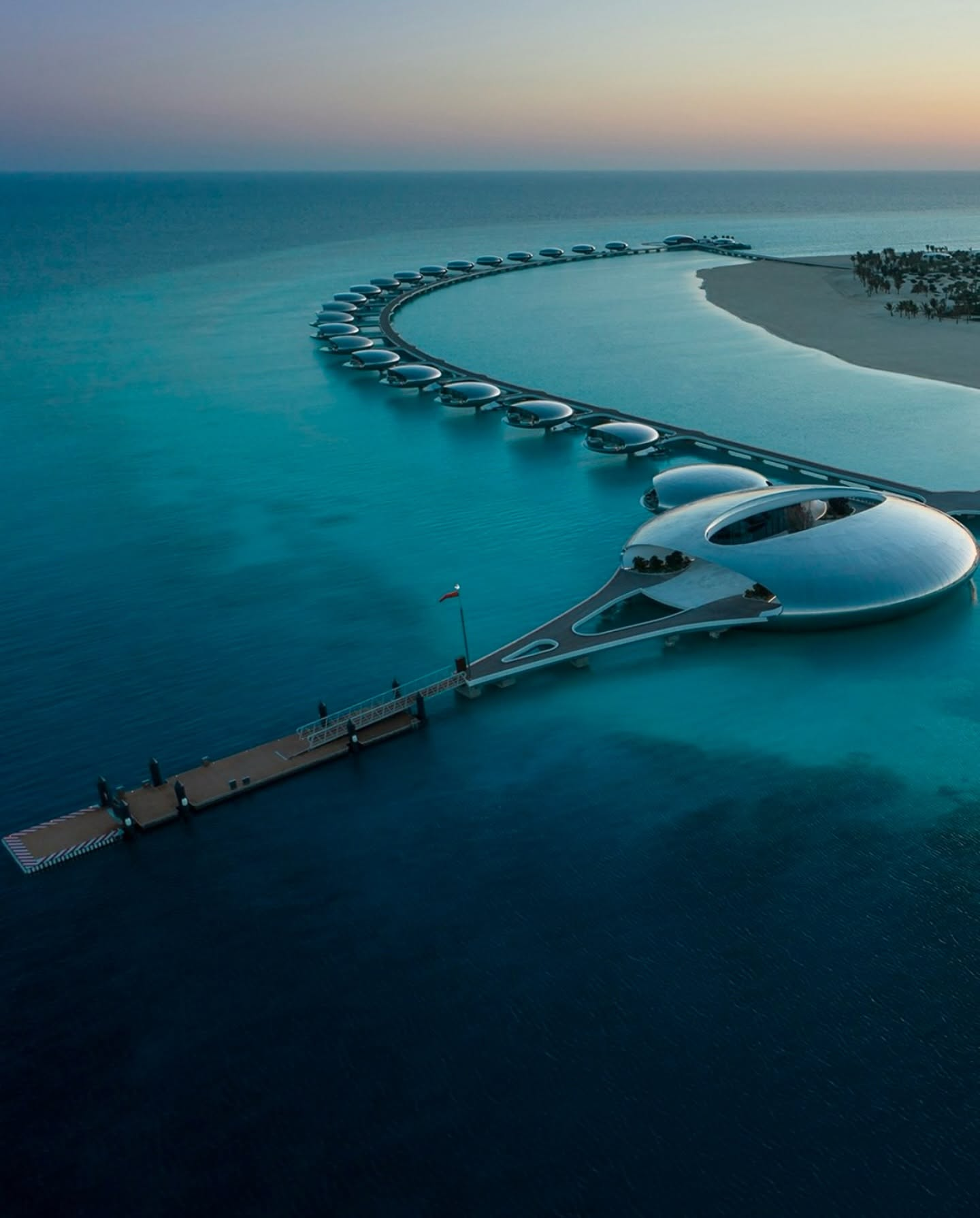
Overwater villas offer an intimate marine experience, while behind the scenes an independent solar energy system is designed to power the island day and night.

  • 73 hotel units.
  • 38 overwater villas.
  • Certified to LEED Platinum standards for construction and building.
  • A solar-powered microgrid supplies the island with electricity day and night.
  • 11,256 solar panels.
  • 18.4 megawatts per hour: Storage capacity.

A variety of marine experiences: Coral reefs surrounding the island, diving and swimming, boat trips and opportunities to explore rare natural scenery.

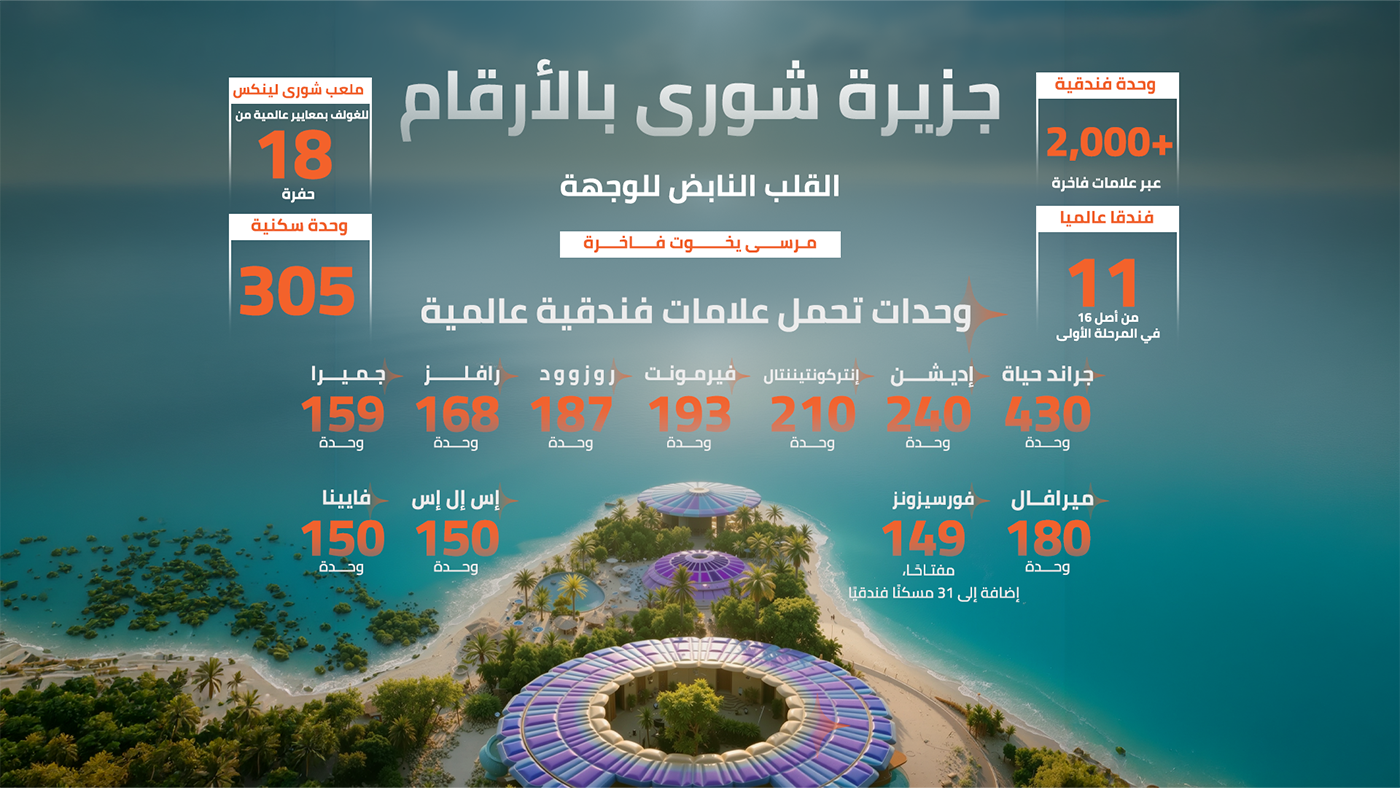
Shura Island in Numbers: The Destination’s Beating Heart

  • 11 world-class hotels out of 16 in the first phase.
  • More than 2,000 hotel units across luxury brands.
  • 305 residential units.
  • Shura Links golf course: A world-class 18-hole course.
  • A luxury yacht marina.

Accommodation from international hotel brands:

  • Grand Hyatt: 430 units.
  • EDITION: 240 units.
  • InterContinental: 210 units.
  • Fairmont: 193 units.
  • Rosewood: 187 units.
  • Raffles: 168 units.
  • Jumeirah: 159 units.
  • Miraval: 180 units.
  • Four Seasons: 149 keys, plus 31 branded residences.
  • SLS: 150 units.
  • Faena: 150 units.
Shura Island: hotels, residential units, international brands and the golf course
Shura Island in numbers: the destination’s beating heart.

Ummahat Island in Numbers: Two World-Class Experiences on One Island

Exceptional privacy and luxury stays with a direct connection to the sea. Both resorts are certified to LEED Platinum standards.

  • The St. Regis Red Sea Resort: 90 hotel units; opened in January 2024.
  • Nujuma, a Ritz-Carlton Reserve: 63 hotel units; opened in May 2024, with 19 private residential villas.
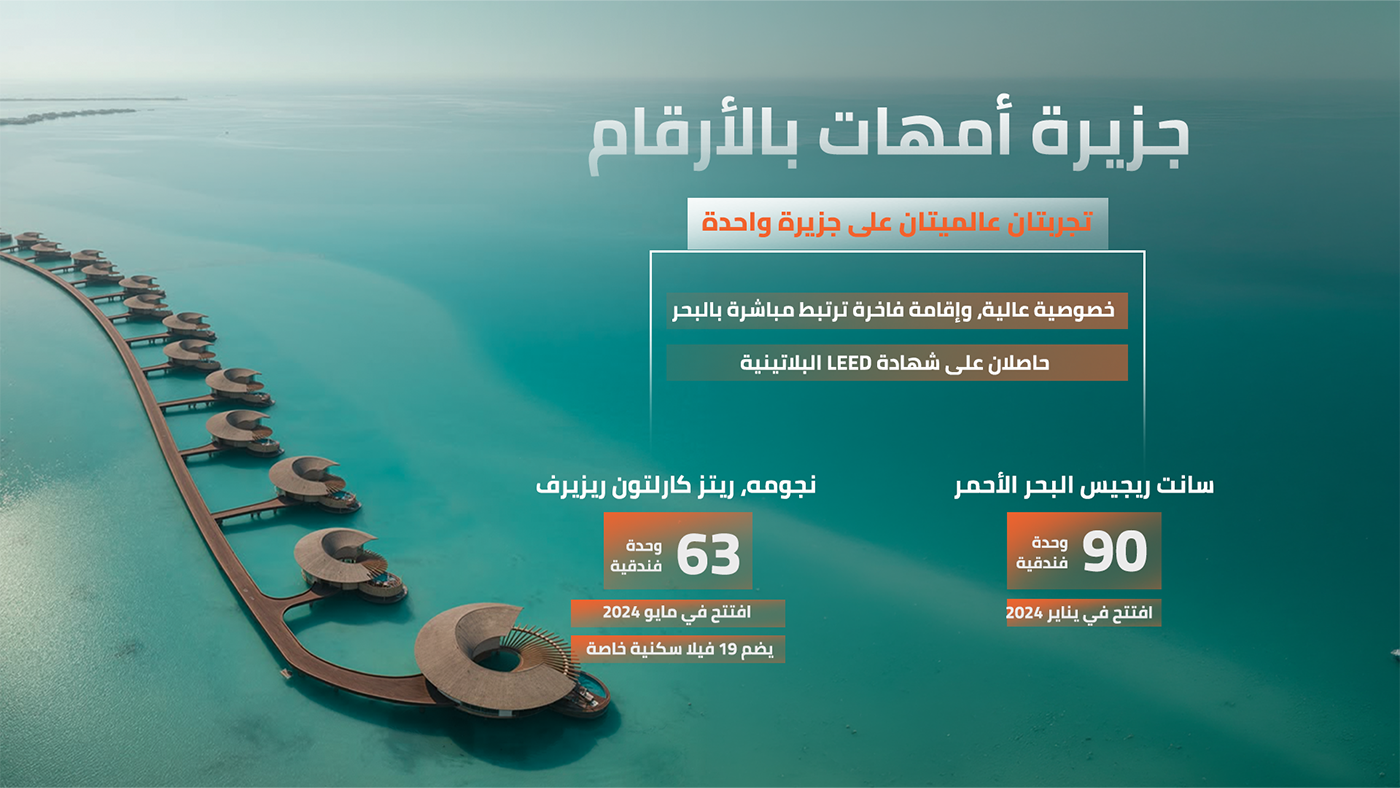
Ummahat Island: The St. Regis and Nujuma, a Ritz-Carlton Reserve
Two world-class experiences on Ummahat Island.

Laheq Island in Numbers

The island marks a different stage in the destination’s development: its first residential project focused on property ownership.

  • 154 luxury villas under the Six Senses brand.
  • Expected opening: 2028.
  • Part of Red Sea Global’s expansion into luxury real estate.
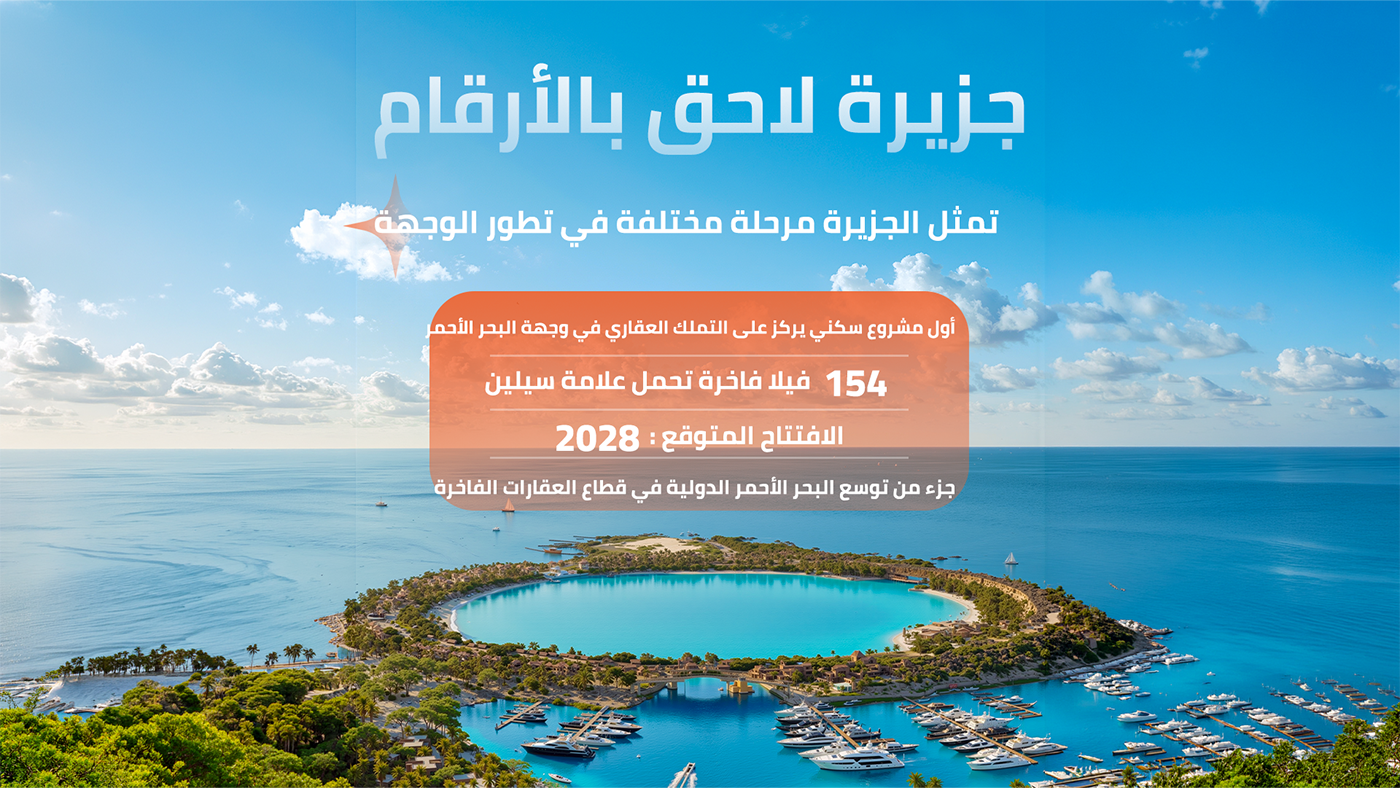
Laheq Island: 154 luxury villas and an expected opening in 2028
Laheq Island: property ownership and a new stage in the destination’s development.

Desert Rock in Numbers

It is The Red Sea destination’s second inland site and the second hotel brand wholly owned and operated by Red Sea Global.

  • It comprises 64 hotel units, including 10 suites and54 villas.
  • The resort is certified to LEED Platinum standards in hospitality.
  • 10 battery containers, with a storage capacity of 18.4 MW/hour.
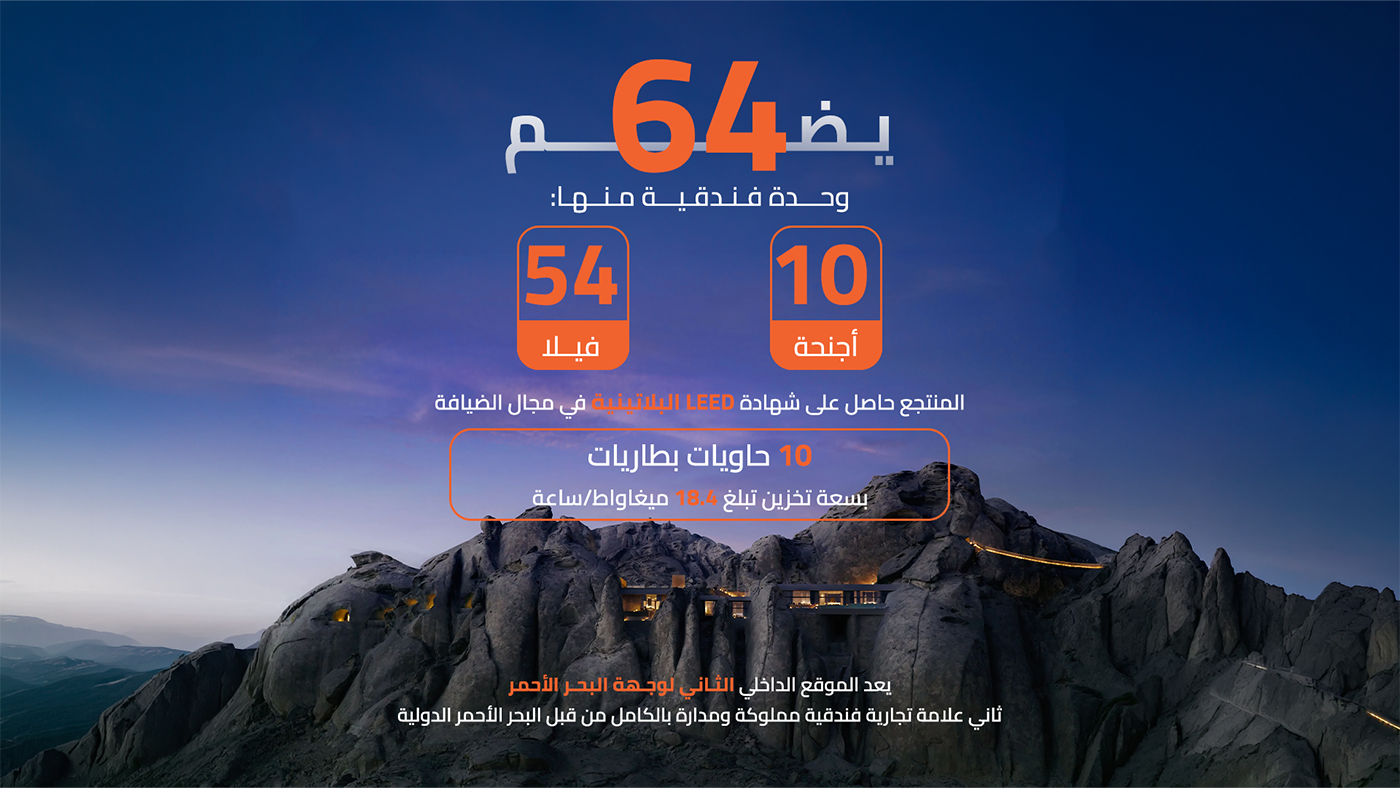
Desert Rock: 64 hotel units, LEED Platinum certification and battery storage
Desert Rock figures as presented in the supplied image.

Protecting Nature at The Red Sea Destination

At a destination of this scale, development is measured not only by what is built, but also by what is left untouched. Conservation programmes therefore extend from coral reefs to wildlife on land.

Protecting the Islands

  • Development will be limited to 22 islands.
  • 9 islands are classified as having high ecological value.
  • The environmental protection target is 30% by 2040.
  • Planned visitor cap: One million visitors a year.

Marine Life

  • A habitat for endangered hawksbill turtles.
  • The creation of new coral reef habitats covering more than 37,500 square metres.
  • Programmes to monitor reefs and relocate them when necessary.
  • Tracking green turtles and rescuing and rehabilitating injured turtles.
  • The successful relocation of doum palms to Turtle Bay Hotel.
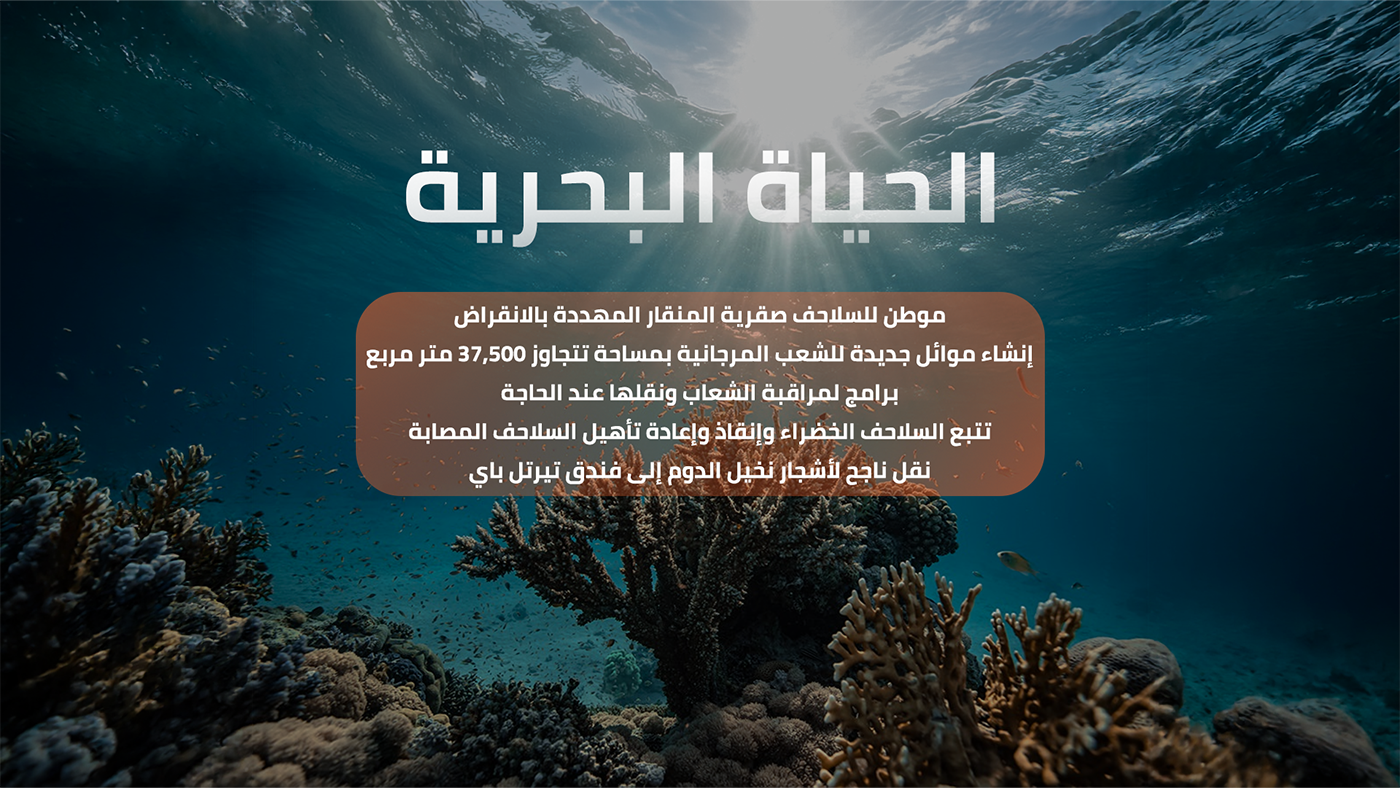
Programmes to protect marine life, turtles and coral reefs
Marine life and conservation programmes at The Red Sea destination.

Waters supporting an exceptional diversity of coral reefs and fish species. Within a protected ecosystem, they make the Red Sea one of the world’s richest seas.

Terrestrial Wildlife

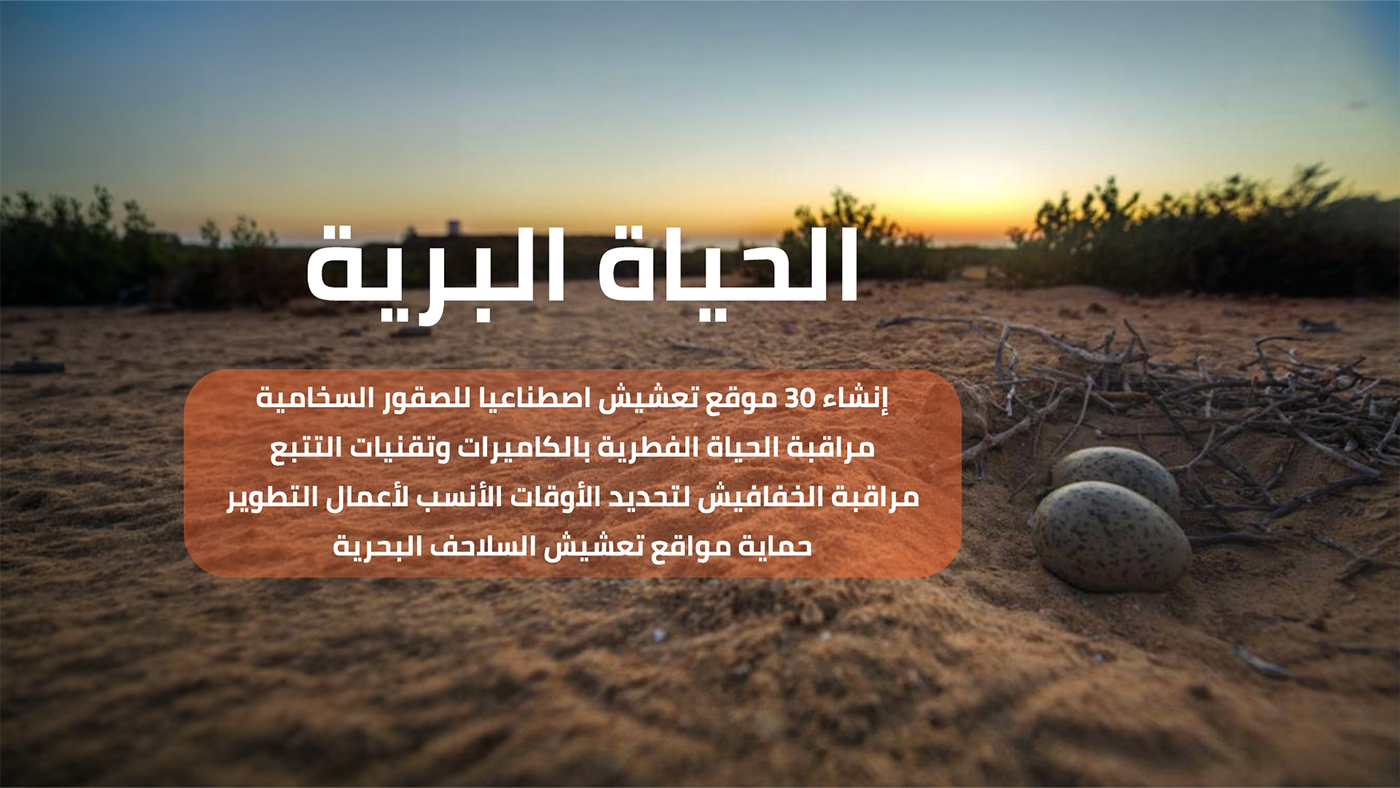
  • The creation of 30 artificial nesting sites for sooty falcons.
  • Monitoring wildlife using cameras and tracking technology.
  • Monitoring bats to identify the most suitable times for development work.
  • Protecting sea turtle nesting sites.
Protecting terrestrial wildlife and nesting sites at The Red Sea destination
Terrestrial wildlife, monitoring programmes and the protection of nesting sites.

50 Million Mangrove Trees by 2030

The Red Sea destination aims to plant 50 Million Mangrove Trees by 2030, protecting coastlines, absorbing carbon and helping create a greener future.

  • Previously reported planting included one million trees as part of the programme’s phases.
  • Planting included 3 million seedlings on World Mangrove Day.
  • Planting included 3.1 million seedlings by the end of 2025.
  • The establishment of the first mangrove nursery in partnership with the National Center for Vegetation Cover Development.
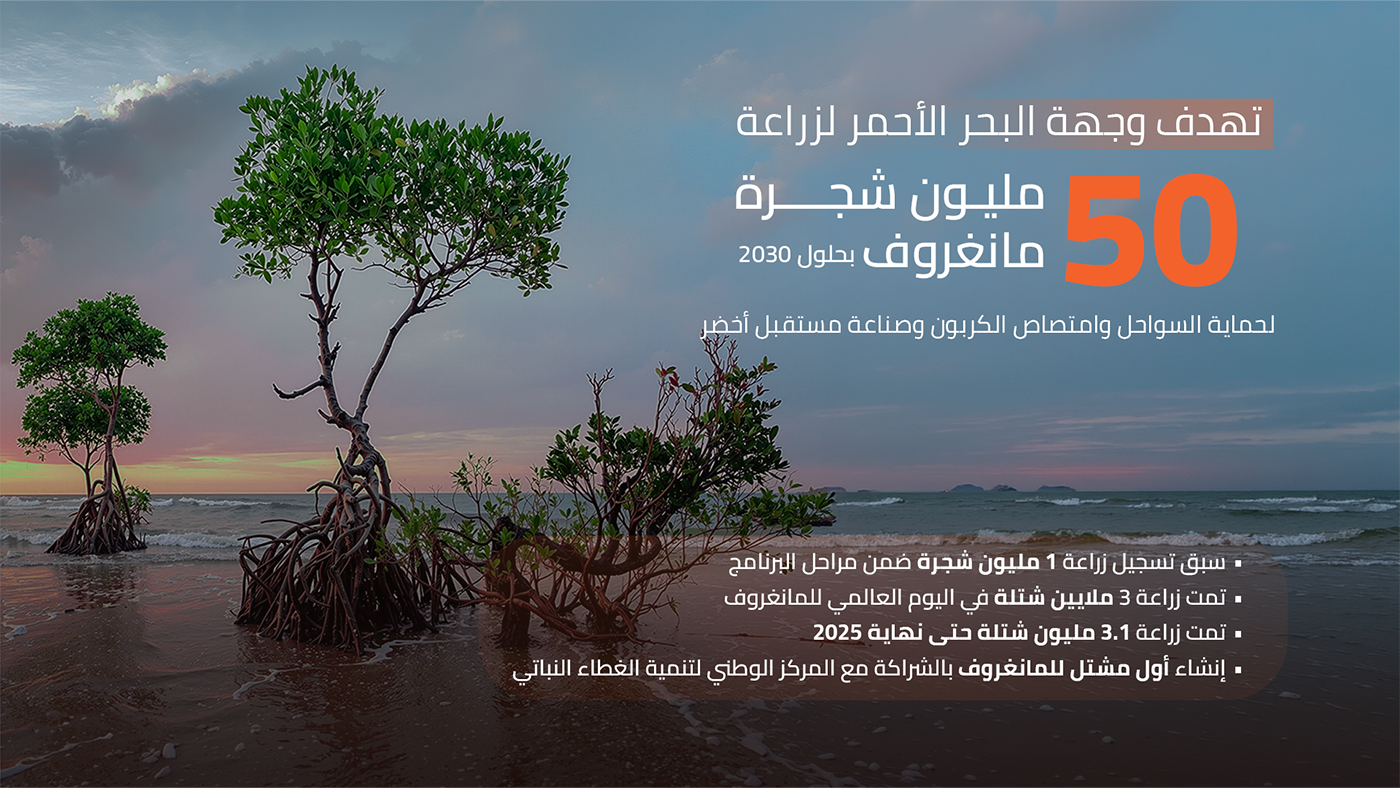
A target of planting 50 million mangrove trees by 2030 to protect coastlines
The mangrove target and planting stages as presented in the source.

Key Performance Indicators (KPIs)

Renewable energy

  • The destination is powered entirely by renewable energy, at 100%.
  • Battery storage capacity exceeds 1,200 MW/hour.
  • 71,600 MW/hour: Energy production in 2023.
  • Number of solar panels: 760,500 solar panels.
  • 40 thousand tonnes of CO₂: Emissions reduction in 2023.

International Certifications

  • 10 hotels and resorts were LEED-certified in 2024, including 8 Platinum certifications.
  • 100% is the target share of hotels to receive LEED certification.
  • The target share of buildings to receive green building certification is 75%.
  • Desert Rock and Nujuma became the first two resorts in the world to receive the new DARKSKY APPROVED RESORT certification.

Connectivity and Electric Mobility

  • The world’s first 5G solar-powered network.
  • More than 160 charging points for electric vehicles.
  • Communications infrastructure designed to blend into the environment.
  • It supports the operation of more than 100 electric vehicles.

Economy and Investment

  • SAR 93.7 billion across 24,436 contracts as of June 2026, according to the KPI panel.
  • Raising tourism’s contribution from 3% to 10% by 2030.
  • SAR 22 billion: Contribution to GDP.
  • The panel also lists an increase in visitor numbers from 100 million to 150 million a year among the tourism sector’s indicators.

Human Development

  • Number of Saudi graduates: More than 1,000 male and female students.
  • The vocational training programme provided 629 employment opportunities for graduates.
  • A total of 106 Saudi students graduated from the tourism security programme and were employed by Red Sea Security.
  • Programmes include pathways in hospitality, tourism, technical services, airports and sustainable development.

Why The Red Sea?

Because The Red Sea is more than a project: it is a story being written into the future. Here, the light arrives before the journey begins, and the sea opens its doors as though it has long known its visitor. Geography finds its grandeur in silence, and in a fleeting meeting of water and sky. Here, a destination is not simply built; it is born.

And because this birth is more than a natural spectacle, forming a major national project, The Red Sea stands out for:

  • A destination spanning 28,000 square kilometres.
  • More than 90 islands.
  • 16 world-class resorts In the first phase.
  • 50 hotels.
  • 760,500 solar panels Powering the destination with renewable energy.
  • 70 thousand direct and indirect jobs for Saudi nationals.
  • SAR 93.7 billion across 24,436 contracts as of June 2026, as stated on this page.
  • The world’s first 5G solar-powered network.

28,000 square kilometres: The area of The Red Sea destination, where the landscape makes room for a journey unlike any other.

760,500 solar panels: power the destination with renewable energy, making it the first in the world in this field.

SAR 93.7 billion: The value of contracts awarded across 24,436 contracts as of July 2026, in the region’s largest tourism project, according to the source’s contracts page.

Tourism Experiences at The Red Sea Destination

At The Red Sea destination, the experience extends beyond the resort entrance. From the water’s surface to its depths, from mountains and trails to nature-based experiences, the journey reveals the place in more ways than one.

At Sea

  • Diving and exploring coral reefs.
  • Swimming in clear, environmentally protected waters.
  • Boat trips through luxury yacht marinas.
  • Water-based experiences, including watersports and recreational activities.

On Land and in Nature

  • Exploring valleys and mountain trails.
  • Exploring dormant volcanic areas and desert plants.
  • Nature and wildlife excursions.
  • Watching sea turtles at their nesting sites.

Culture and Heritage

  • Cultural experiences and events reflecting the heritage of the Red Sea.
  • Visits to historic sites near Al Wajh and Umluj.

Branded Experiences

  • WAMA: Marine experiences and activities.
  • GALAXEA: Diving and underwater exploration experiences.
  • Akun: Adventures and exploration on land and in nature.

International Partnerships with The Red Sea Destination

Red Sea Global’s presence extends beyond destination development into media, sport and entertainment, through partnerships that share its vision with different audiences worldwide.

Al-Ahli Saudi Club

Red Sea Global became Al-Ahli Saudi Club’s platinum sponsor in 2023. Its logo appears on the team’s shirts during official matches.

Bloomberg

The production of an international film series on regenerative tourism at The Red Sea. The series attracted millions of views around the world.

Warner Bros. Discovery

The production of documentaries and short films about nature and sustainability at The Red Sea destination. The films highlight nature, sustainable tourism and its impact on marine and terrestrial environments.

T1 Esports

The first global agreement of its kind between a luxury destination developer and an esports organisation. The 3-year strategic partnership began in July 2025 and was brokered by CAA SPORTS.

Prepared and documented by: SAFAR Magazine Editorial Team
Section: In Focus

The Red Sea Destination: 2026 Facts and Figures | SAFAR Magazine

From the Airport to Your Destination: How Do Travel Apps Make Your Trip More Enjoyable?

Smart Moves

From the Airport to Your Destination: How Do Travel Apps Make Your Trip More Enjoyable?

A comprehensive guide to connectivity, transport, offline navigation, translation, and outdoor adventure apps (hiking and diving)

By:SAFAR Editorial Team |

In an age when your smartphone is your primary companion everywhere, travel has changed: technological advances have made it possible to manage every detail of your journey at the touch of a button.

Just a few years ago, travel was full of exhausting details and unexpected situations. Today, most of these challenges can be resolved through a handful of smart apps that accompany you before departure, during your journey, and even after you return.

In this article, we take you through some of the leading smart travel apps that make your journey smoother and more enjoyable, whether you are on a short vacation, a business trip, or an exploratory adventure.

Connectivity and Communication Wherever You Go

Numero eSIM | Instant Connectivity and Virtual Numbers

This app eliminates the need to buy a local SIM card in every country. WithNumero eSIM, you can obtain virtual phone numbers from more than 80 countries, as well as data SIMs that let you make calls and activate social networks in 190+ countries at competitive prices.

Getting Around Within and Between Cities

Omio | Travel Between European Cities and Beyond

An integrated platform that organizes your travel within Europe and North America. It lets you compare trains, buses, flights, and ferries on a single page, then book and store digital tickets directly on your phone without printing them.

FREENOW | Urban Transport in European Cities

Covering more than 150 European cities, including London, Paris, and Berlin, it lets you flexibly book taxis, private cars, and electric bikes, with secure digital payment support (Apple Pay / PayPal).

Maps and Navigation: Smart Guidance and Offline Services

Google Maps | The Comprehensive Digital Guide

Beyond directions, it lets you save places you want to visit, explore nearby restaurants and landmarks, and use navigation and virtual exploration technologiesStreet ViewandImmersive Viewto visualize a place before you arrive.

Mapy.com & Maps.me | Complete Offline Maps

Excellent options for mountain trips, remote roads, and distant villages. These apps let you download entire country maps for use without network coverage, with detailed directions for walking, driving, and hiking.

Overcoming the Language Barrier

Google Translate and Specialized Apps

The appGoogle Translateprovides instant translation of text, conversations, and menus through your camera, with an option to download languages for offline use. Tools such asTripLingoandiTranslatecomplete the picture with phrases for local customs and live translators.

Hiking: Nature Adventures and Safe Preparation

Hiking is an immersive experience in nature that requires careful planning (checking your fitness and the weather, and taking a power bank and enough water):

  • AllTrails:The best-known app for discovering walking and riding trails, with adventurer reviews and offline maps.
  • Gaia GPS:A terrain reference for mountainous and remote areas, allowing you to plan routes and clearly track your location beyond network coverage.

Diving: Exploring the Depths While Staying Safe

Diving requires full compliance with safety standards, checking that centers are certified, and checking water currents before descending:

  • PADI App:The official global platform for divers, offering digital dive logs, electronic certification cards, and a directory of dive centers.
  • MySSI:A comprehensive digital assistant integrated with a dive computer for tracking equipment maintenance, reviewing training materials, and browsing more than 65,000 dive sites worldwide.

The Right App for a Stress-Free Journey

By choosing smart digital tools, you can stop worrying about getting online, finding transport, or feeling anxious in isolated areas, and focus on enjoying the essence of your trip and its unique details.

Prepared and documented by: SAFAR Editorial Team
Section: Smart Moves

The Best Smart Travel Apps for 2026: A Guide to an Easier Trip From the First Step

Smart Moves

The Best Smart Travel Apps for 2026: A Guide to an Easier Trip From the First Step

A comprehensive guide to AI, planning, transport, and safety apps for a smooth journey from departure to return

By:SAFAR Editorial Team |

In today’s world of travel, the best smart travel apps are no longer a luxury; they have become an essential part of the experience. When you decide to visit somewhere new, the excitement is indescribable. Everything seems perfect at first, but the reality requires careful organization.

One trip goes smoothly, while another is filled with small, exhausting details: an overpriced flight booking, unclear transport options, or a disappointing meal. The difference often has less to do with luck than with choosingthe right smart travel app at the right moment.

In this guide, we review the best travel apps for 2026 across every stage of your journey:

The Planning Stage: Before Takeoff

One good decision before takeoff saves you time, money, and effort throughout your trip.

1. Skyscanner: The Cheapest Flight With One Tap

The app compares hundreds of airlines and booking sites simultaneously to offer the best prices, along with the“Anywhere”feature, which opens up excellent destinations at prices that could change your entire plan.

2. Hopper: AI Predictions for the Ideal Time to Book

The appHopperuses artificial intelligence to analyze daily movements in flight prices and give you a clear recommendation:“Book now”or“Wait”. The app saves an average of up to $50 per ticket, with full support for hotel bookings and car rentals.

At the Heart of the Journey: Stress-Free Transport and Connectivity

Once you arrive at your destination, the pleasure of travel depends on how easily and smoothly you can get around and stay connected.

3. Citymapper: Public Transport Without the Complexity

In major cities such as London, Paris, and Tokyo,Citymapperbrings the metro, buses, and trams together in one interface, comparing options by time and cost to give you the most suitable routes instantly.

4. Airalo: Instant Internet Through eSIM From the Moment You Arrive

It saves you the search for a SIM card kiosk at the airport. WithAiralo, you can buy and activate a digital eSIM as soon as you arrive in more than 200 countries and avoid expensive roaming charges.

Exploring Your Destination: Experiences and Restaurants

5. Klook: Booking Experiences and Activities in Advance

An integrated platform through which you can book tours, activities, and tickets for major attractions at better prices, without standing in line.

6. Yelp & Zomato: Reliable Restaurant Reviews

They provide real reviews from travelers and local residents, with filters for cuisine and budget to help you avoid disappointing dining experiences.

Safety and Budget: Preparing for the Unexpected

7. TripWhistle Global SOS: Emergency Numbers Anywhere

It provides police, ambulance, and fire service numbers in more than 200 countries and works effectively even without an internet connection.

8. App in the Air: Your Personal Flight Assistant

It delivers instant alerts about schedule changes, boarding gate changes, or flight cancellations, automatically offering immediate alternatives.

9. XE Currency: Budget Management and Currency Conversion

It provides instant exchange rates that work offline, letting you check the value of any amount before paying and track your expenses without complicated mental calculations.

The Right App Shapes the Experience

At every stage of travel, the right app turns confusing moments into enjoyable, seamless experiences. The question now is no longer:Where will your next trip take you?But:Are you ready to experience it more intelligently?

Prepared and documented by: SAFAR Editorial Team
Section: Smart Moves

The Future of Hospitality: When a Hotel Becomes an Experience, Not Just a Place

Future Now

The Future of Hospitality: When a Hotel Becomes an Experience, Not Just a Place

How are technology, hyper-personalization, and sustainability reshaping global and Saudi hospitality under Vision 2030?

By:SAFAR Editorial Team |

Imagine arriving at a hotel after a long journey to find the room temperature set just as you like it, your favorite coffee waiting for you, and suggested activities for your trip ready before you ask. This is no scene from science fiction; it is part of the transformation the hospitality industry is experiencing today.

A hotel is no longer simply a place to stay. It has become a complete experience built around the guest. This has prompted the question that is changing the entire sector:What does the traveler really need?

In this article, we explore how the hospitality industry has redefined itself, and how Saudi Arabia has become one of the world’s leading examples in driving this transformation.

When a Stay Is Designed Around You: Hyper-Personalization

Today’s travelers seek more than a room: they want an experience that reflects who they are, a place they feel they have chosen consciously, rather than a passing stay in a room that could be replicated in any other city in the world.

This is where one of the hospitality sector’s biggest transformations has emerged. Hotels no longer compete solely on location, room size, or speed of service, but on their ability to understand guests before they ask, from room temperature to the pace at which they move and the details with which they begin their day.

This is whereartificial intelligencequietly steps in: not as a technological tool that imposes its rigid presence, but as an invisible memory that intelligently gathers signals and data and turns them into comforting details, giving guests the feeling that their stay was designed especially for them.

Sustainability: From an Added Value to a Prerequisite for Luxury

Years ago, sustainability in hotels meant a small paper card asking you to reuse your towel. Today, it has become one of the most important criteria conscious travelers consider when choosing a destination.

It is no longer enough for a hotel to declare its concern for the environment. It must demonstrate this through construction, operations, energy and water consumption, and its relationship with the local community. Above all, sustainability no longer conflicts with luxury; it has become the heart of its new definition: exceptional comfort without a negative environmental impact.

Technology You Cannot See, and Data as a Hidden Brain

Before you put your suitcase down, check-in has already been completed on your smartphone, and the door opens with a digital key. Yet the value of technology lies not in its visible presence, but in the time, effort, and stress it saves.

Behind this quiet scene, algorithms and vast databases analyze booking behavior, weather, and room occupancy to determine the most suitable price and manage resources highly efficiently. The central aim remains to use data to make hospitality more human and more understanding of guests, rather than simply an unfeeling automated process.

The Hotel as a Space for Living: Hybrid Hospitality and Holistic Wellness

In the past, wellness meant a gym or a traditional spa. Today, the concept has expanded to include circadian lighting, air quality, quiet spaces, and healthy nutrition that support better sleep and relaxation.

Alongside this, the rise of remote work and bleisure trips has led to the emergence ofhybrid hospitality: a hotel that combines a comfortable workspace with a haven for rest and recreation, allowing guests to live within the experience rather than pass through it quickly.

The Future of Hospitality Is Not Measured in Stars

Modern hospitality is no longer measured by star ratings alone. Stars describe a room, but they do not guarantee a hotel’s ability to understand its guests or respect its environment. True luxury lies in intelligence and quiet, anticipatory service.

“The more technological systems take over routine tasks, the more people can fulfill their essential role: to welcome, reassure, and understand what algorithms cannot feel.”

Saudi Hospitality and Shaping the Future (Vision 2030)

This is precisely where the Saudi hospitality experience begins. Through major investment and an ambitious vision, authentic cultural identity and forward-looking environmental design, Saudi Arabia is not simply keeping pace with the future of hospitality; it is actively helping shape its global standards through Vision 2030 projects.

Prepared and documented by: SAFAR Editorial Team
Section: Future Now

Smart Hotels: What Is a Stay Without Human Intervention Like?

Future Now

Smart Hotels: What Is a Stay Without Human Intervention Like?

Exploring how artificial intelligence and contactless technologies are reshaping the future of the global hospitality sector

By:Hadeer Ayman |

Imagine arriving at a hotel after a long journey: no receptionist, no waiting at the door, and no traditional key. Everything happens simply through your smartphone. If you are wondering:What might a night in a hotel run by artificial intelligence look like?The answer may be very different from what you expect.

Choosing a destination alone is no longer enough; the type of accommodation itself has become an essential part of the travel experience. With the emergence ofsmart hotels, the idea of travel without human intervention has begun to shift from a futuristic concept into a real experience that travelers enjoy every day.

In this article, we explore what smart stays look like around the world, what these hotels offer, how they work, and whether they truly represent the future of artificial intelligence in travel and hospitality.

Henn na Hotel: The Hotel Run Entirely by Robots

Have you ever imagined being greeted by a robot instead of a receptionist? In Japan, this is no science-fiction scenario, but an everyday reality for visitors toHenn na Hotel(whose name literally means “the strange hotel”).

This hotel has become one of the world’s best-known examples of smart hotels, with AI-powered robots handling every task, from check-in and delivering luggage to rooms to answering guests’ questions in multiple languages.

Your room keys arrive digitally on your phone, all services are managed through a dedicated app, and check-out is completed without standing in line. This embodies what is known ascontactless hospitality, where a stay becomes a seamless, interconnected system operating at peak efficiency.

The exterior of Henn na Hotel in Japan

What Truly Makes a Hotel Smart?

Not every hotel with an interactive screen at its entrance qualifies as a smart hotel. The real difference lies in an integrated system working behind the scenes to manage the entire stay through the following four pillars:

First: Automated Booking and Payment

These hotels offer round-the-clock booking and reallocation systems, allowing guests to select a specific room and their preferences, with secure payment and instant confirmation, without needing to contact sales or reception staff.

Second: Smart Check-in Without Waiting

An encrypted electronic key reaches you through your smartphone, or you collect it from a self-service kiosk. Smart locks recognize your arrival time and let you enter immediately, while the review and check-out process follows the same seamless system.

Third: AI-Powered Communication and Assistance

Requests and assistance are handled by chatbots and smart voice assistants that answer guests’ questions and suggest nearby restaurants and places at any time, completely eliminating time spent waiting on reception phone lines.

Fourth: Direct Contactless Services

From autonomous delivery robots in the corridors to vending machines for everyday essentials and QR codes that let guests control their room’s lighting, air conditioning, and entertainment equipment directly from their smartphones.

Why Do Travelers Prefer Smart Stays?

Why do some people prefer a hotel without human staff? The answer lies in the efficiency and speed associated with travel today:

  • Efficiency and Time Savings:Eliminating lengthy routine procedures, especially for business travelers or those arriving on late flights.
  • Digital Comfort and Privacy:Many people prefer a quiet digital experience that lets them recharge without additional social interactions after an exhausting day of travel.
  • Competitive Pricing:Reducing operating expenses (OpEx) through automation and artificial intelligence makes it possible to offer excellent, competitive room rates relative to the luxury services available.

Ultimately, a traveler’s next choice may no longer be between a traditional hotel and a modern one, but between an experience defined by waiting and routine procedures and one that works exceptionally smoothly from the very first moment they step inside the hotel.

By: Hadeer Ayman
Section: Future Now – SAFAR Magazine

When the Experience Becomes the Destination

The Experience

When the Experience Becomes the Destination

The Red Sea Destination: Chapter Four – The New Luxury (p. 53)

By:Younes Al-Sulaiman |

For a long time, luxury was associated with what could be seen: larger spaces, more details, and endless services. Today, however, luxury seems to have chosen a different path. It no longer begins with marble, chandeliers, or star ratings, but with a much simpler question:How will the guest feel when they leave?

At The Red Sea, resorts are built around the experience rather than the buildings. Rooms are designed not simply to overlook the sea, but to make it part of the stay. Architecture comes to learn from nature rather than compete with it.

That is why every brand here seems to offer a different interpretation of luxury, while all share one idea: the place is not the end of the journey … but its beginning.

The Philosophy of Resorts: Redefining the Stay

Shebara Resort: Life Suspended Above the Water

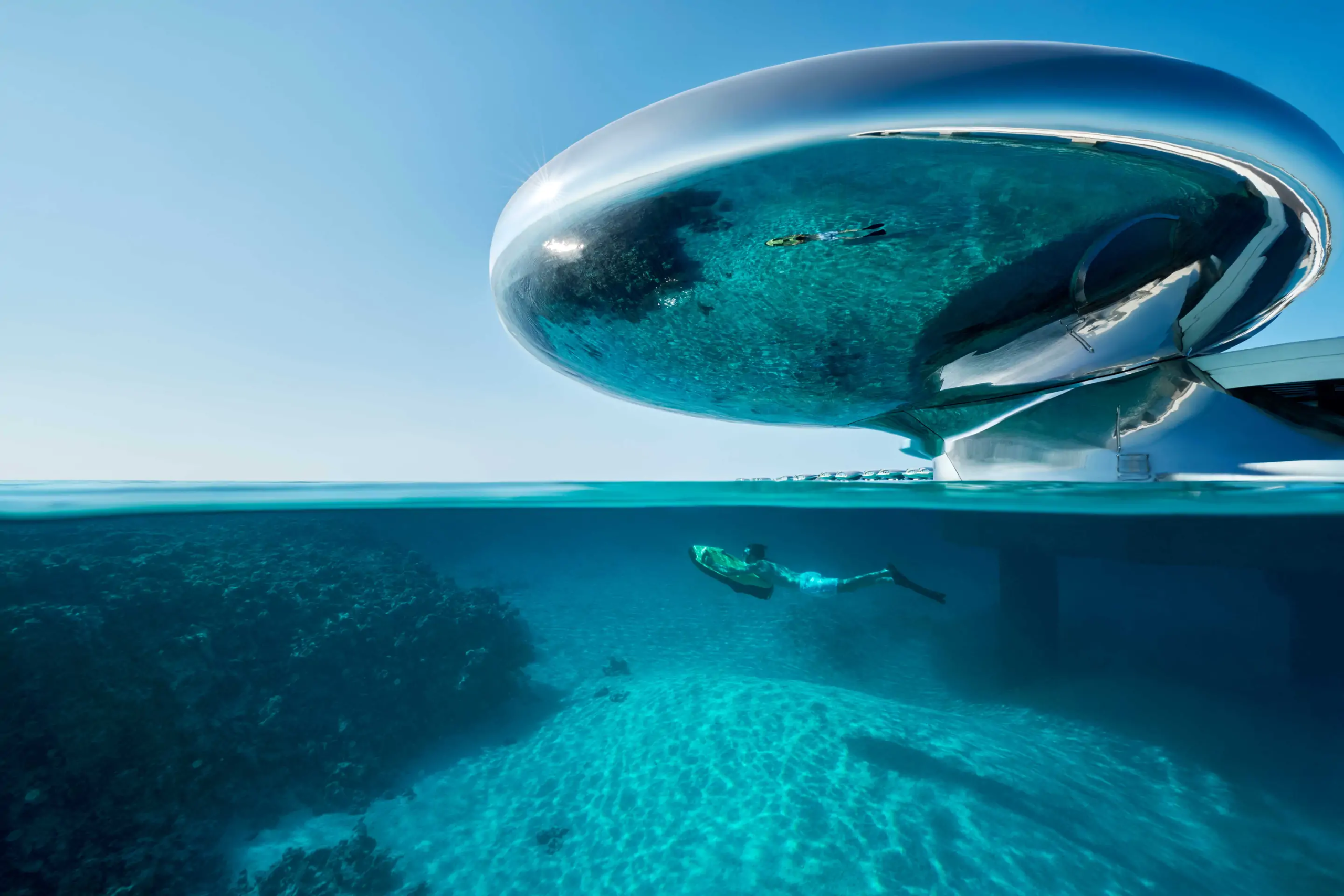
At Shebara, you live with the sea, not merely above it. The room does not end at its walls: villas sway with the waves, the sea enters through every window, light becomes part of the furnishings, and the horizon part of the ceiling. Here, you live within the sea rather than simply looking out at it.

Shebara villas above the Red Sea
The reflective design of Shebara overwater villas

The St. Regis Red Sea Resort: Luxurious Rituals with Nothing Left to Chance

At St. Regis, service arrives when you need it, before you ask. A ritual, a smile, a small detail never left to chance, and a host who knows your name before you introduce yourself. Here, service is a ritual rather than an act.

Nujuma, a Ritz-Carlton Reserve: Rarity Treated as Art

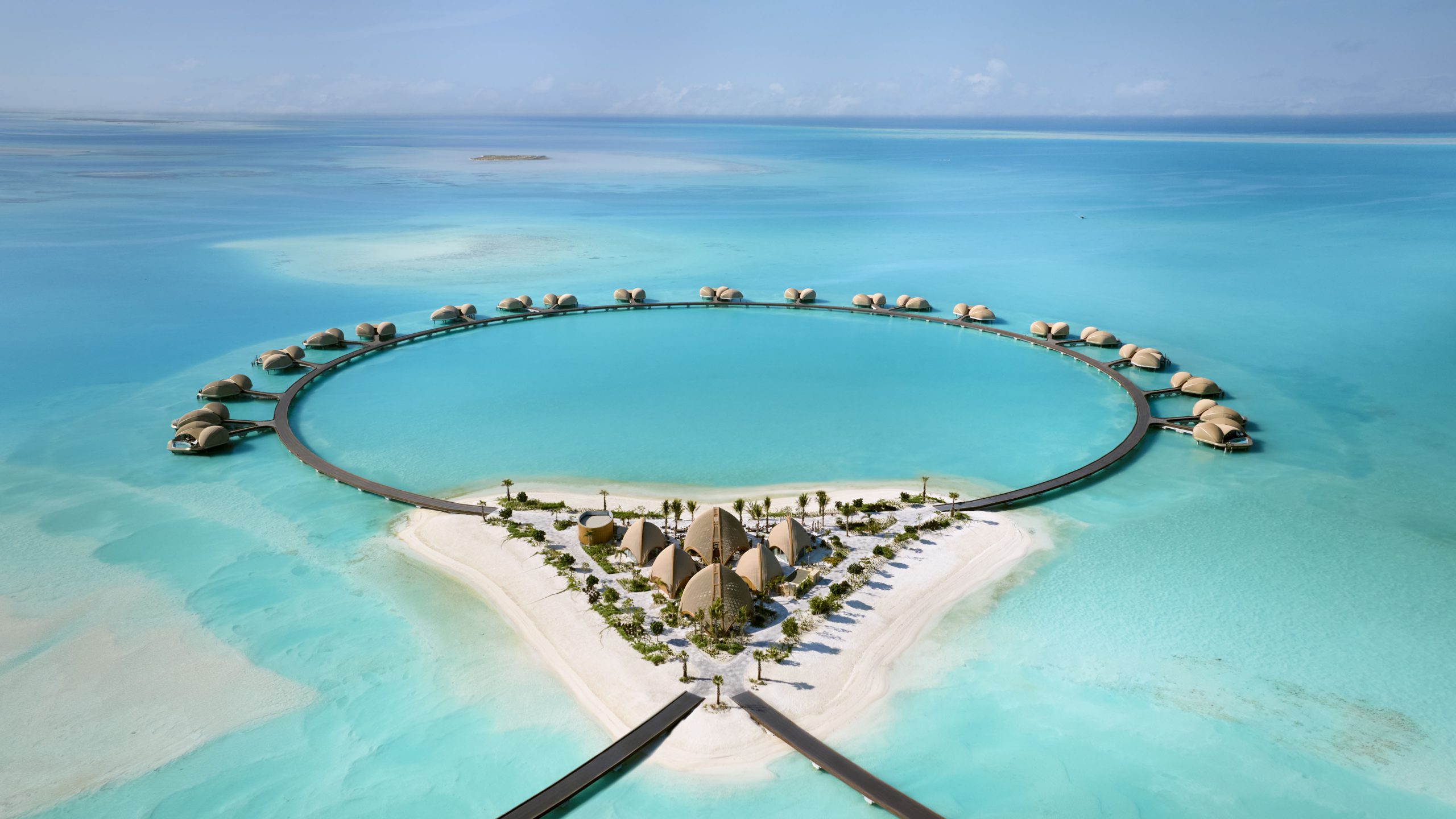
At Nujuma, privacy is a masterpiece rather than a service. Each villa feels like a small island, and every moment is crafted like jewelry: slowly, carefully, and with respect for time. Here, the sea becomes clearer and time more precious.

Nujuma overwater villas at The Red Sea

Six Senses Southern Dunes: Wellness and a Reordering of Awareness

A place that reorders awareness, where luxury is measured by what you feel rather than what you see. Light, silence, natural materials, and spaces designed to bring you closer to yourself all become part of a journey of healing.

The Red Sea EDITION: Design That Sees the World Differently

It offers visual scenes rather than rooms. A room here is designed not simply for you to inhabit … but to inhabit you. Light enters first, then the sea, then you. Windows become views that make the sea part of the wall and the horizon part of the ceiling.

Miraval The Red Sea: A Quiet Return to Yourself

In the heart of silence, where the scent of herbs mingles with the warmth of sand, Miraval emerges as a space where we live wellness rather than search for it. Calm here is a treatment rather than a choice, and the moment an inner ritual.

InterContinental The Red Sea Resort: International Classicism with Local Character

International warmth with local character, and details written in a language of consistency and refined taste. Here, comfort is an identity rather than an option.

Four Seasons Resort and Residences The Red Sea: Luxury Discovered in the Details

Four Seasons raises standards of comfort rather than its voice, and details are discovered rather than displayed: a warm towel after a swim, coffee arriving before you ask, and a faint scent of wood in the corridor. Luxury is built from small details.

SLS The Red Sea: A Stay Pulsing with Life

A stay here arrives as a lively rhythm rather than motionless calm. Boldness, light, and sea come together to create an experience that knows how to move, and how to settle when touched by the waves.

Turtle Bay Hotel: The Simplicity of the Sea with the Luxury of Family

Luxury here takes the form of warmth that feels like family, rather than a display. Sea, sand, and small moments combine to create a peaceful stay that lets nature speak and makes memories the finest form of indulgence.

Architectural Innovation and Sustainability

Desert Rock Mountain Resort

At Desert Rock, the resort does not stand before the mountain: the mountain becomes part of its composition. Units are distributed within and around the terrain, while an independent solar-energy system supports the experience.

The resort is The Red Sea destination’s second inland site and the second hotel brand wholly owned and operated by Red Sea Global. It includes 64 accommodation units (10 suites and 54 residential villas) and has received LEED Platinum certification in hospitality.

Brands Integrated into the Experience

At The Red Sea, the brands feel blended into the place rather than separately present. Each brand is a layer of the experience, added to nature, culture, arts, and people, rather than a separate identity. Together they create a single experience that cannot be divided into parts.

Younes bin Mohammed Al-Sulaiman
From the second issue of SAFAR magazine – “The New Luxury” chapter (p. 53)

48 Hours in Riyadh: From Souq Al Zal to Diriyah

The Experience

48 Hours in Riyadh: From Souq Al Zal to Diriyah

A comprehensive, practical guide to a journey combining authentic history and contemporary luxury in the Saudi capital

By:SAFAR Editorial Team |

Between past and future, your journey in Riyadh begins at King Khalid International Airport, which recently ranked first as the world’s most improved airport. Its swift, organized arrival procedures make your visit to Riyadh special from the very first moment.

When visiting Riyadh, you will not need to choose between authenticity and modernity: the city simply offers both. You can begin your day at Riyadh’s historic attractions, among old markets scented with incense and Arabic coffee, then move on to fine restaurants and contemporary experiences in the evening.

That is why we offer this practical 48-hour Riyadh itinerary: to help you know what to do, where to go, and when, without complications.

Day One: Riyadh’s Historic Heart

1. Accommodation and Getting Ready to Set Off

Choosing a hotel in Riyadh is the first step in organizing your itinerary. Whatever your budget, you will certainly find suitable options:

  • For a limited budget:Stay in the city center.
  • For a mid-range budget:Choose a four-star hotel in Al Maather or Al Olaya.
  • For an unlimited budget:Stay at a luxury hotel such as Four Seasons, The Ritz-Carlton, or Al Faisaliah.

Choose a hotel near the city center to make it easier to reach the attractions on your first day. Once settled, drop off your bags and begin your day straight away.

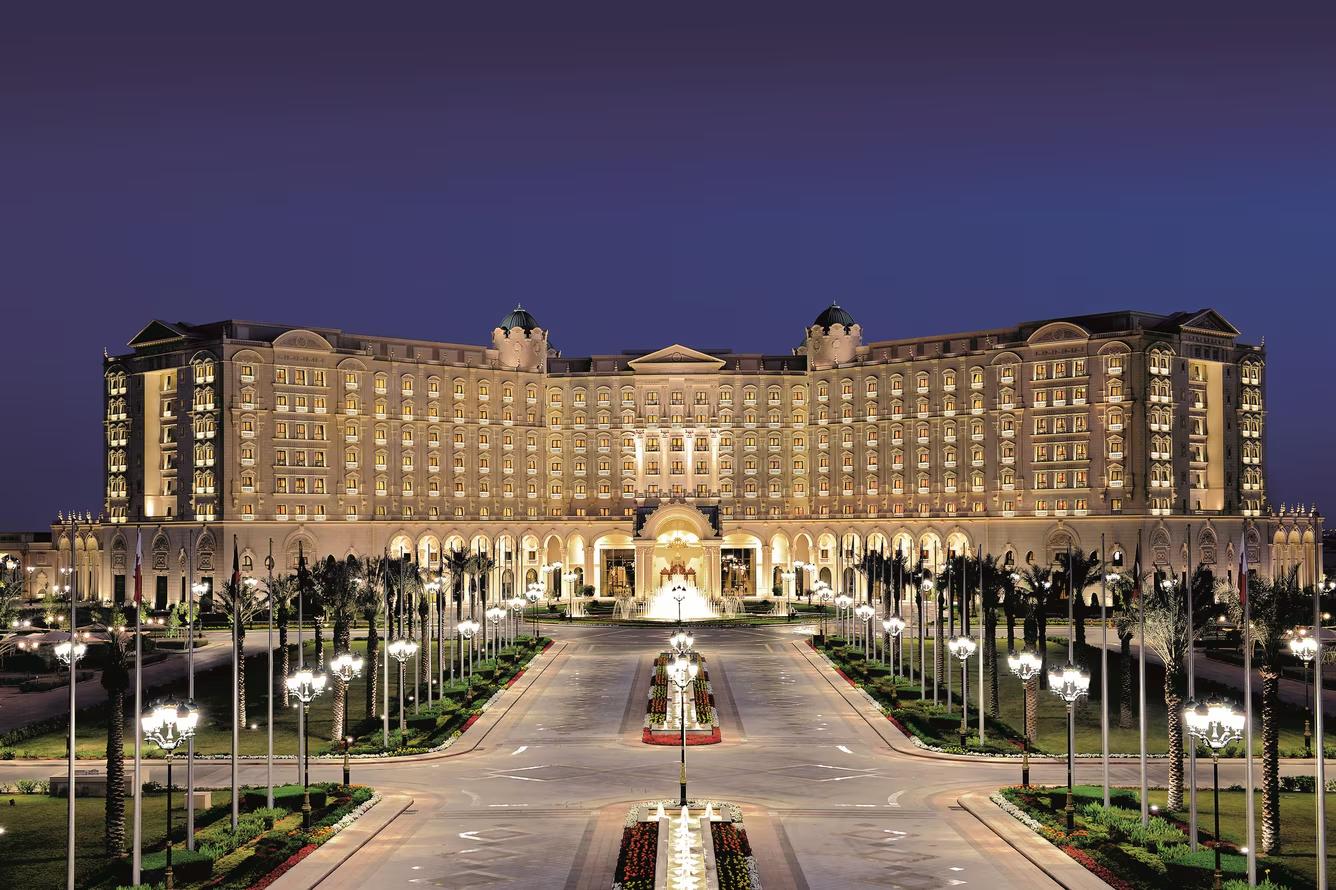
A luxury hotel in Riyadh at night

2. Reaching the Qasr Al Hokm District

We recommend heading to the Qasr Al Hokm district before 3 p.m. to enjoy its daytime atmosphere. Take the Riyadh Metro from your nearest station: it avoids traffic and offers a modern, comfortable experience before you enter the city’s historic heart.

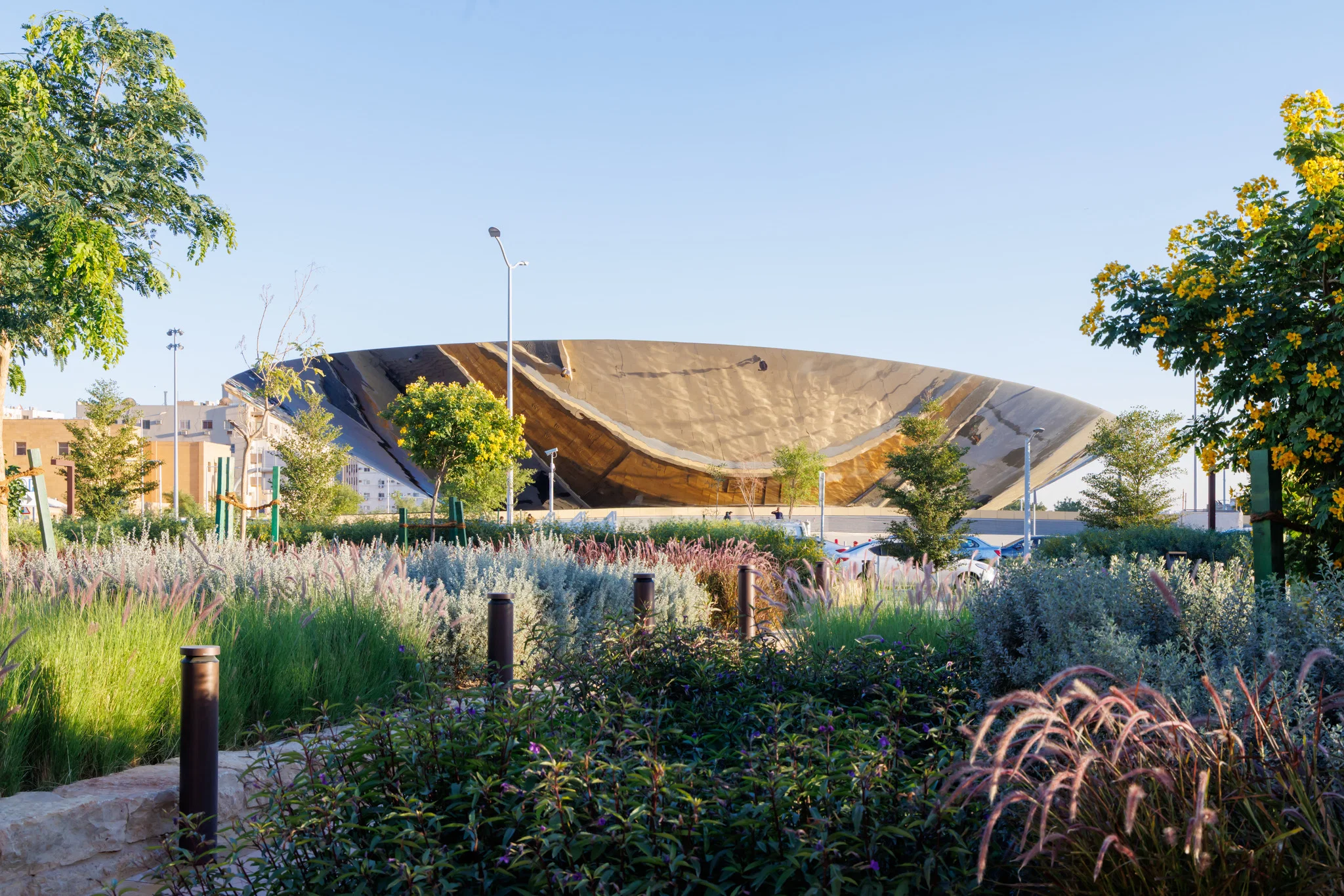
Qasr Al Hokm metro station in Riyadh

3. From Qasr Al Hokm and Al Masmak to the Old Markets

Qasr Al Hokm station is your starting point. As soon as you emerge, you will see Qasr Al Hokm before you, with its modern Najdi architecture. A short distance away stands Al Masmak Palace, housing a museum that tells the story of the Kingdom’s unification through compelling visual displays.

After your heritage visit, continue on foot through Al Muaiqiliyah Market and Al Taamir Market until you reach the highlight of today’s itinerary: Souq Al Zal.

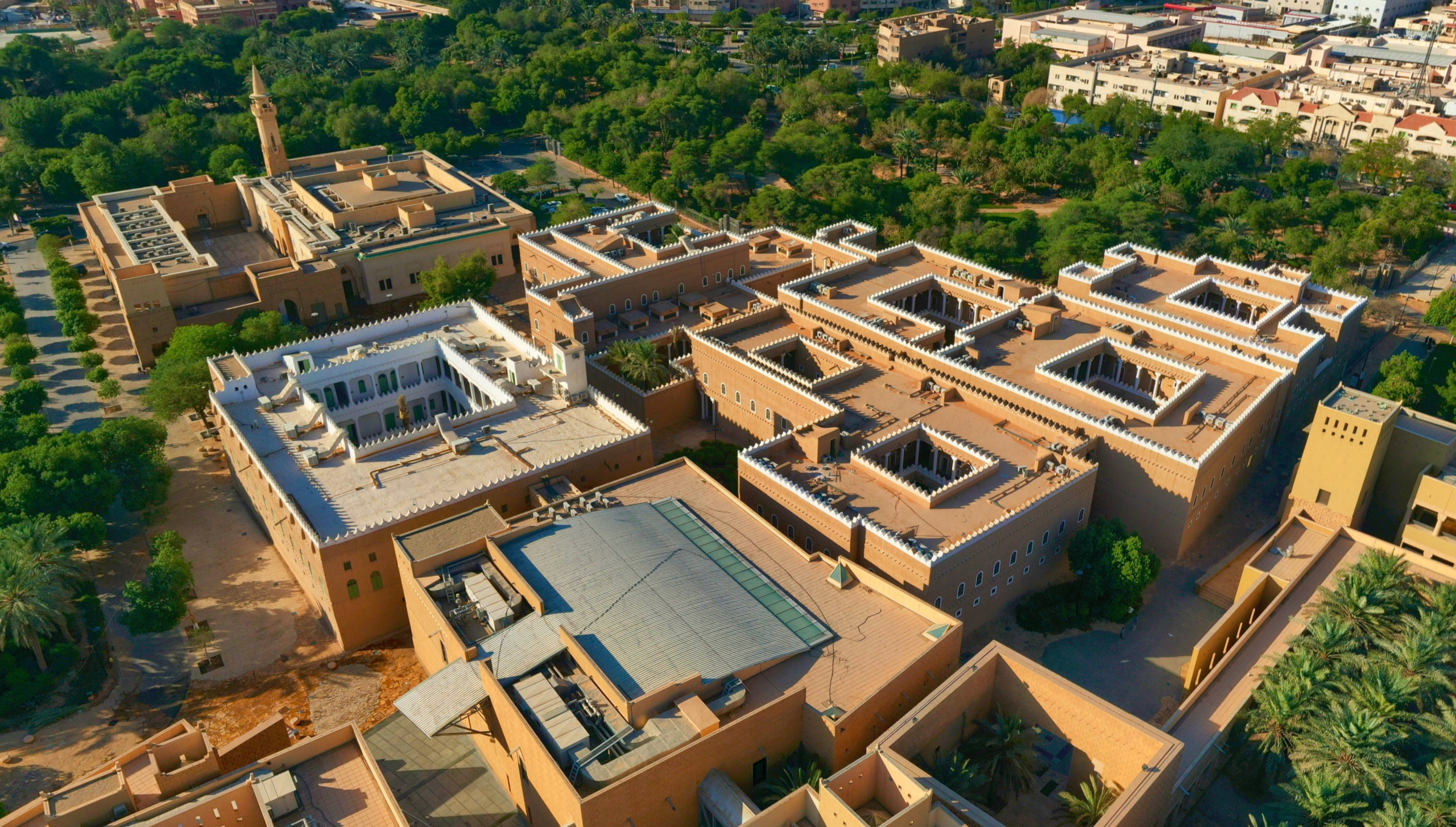
An aerial view of a heritage palace complex in Riyadh

4. Souq Al Zal: Deep Historical Roots and a Cultural Pulse

The market takes its name from “zawliyah” (carpet) and has been a living museum since 1901. Inside, the air seems to carry the fragrance of time among antiques and heritage collectibles, with overlapping voices mingling with the scents of incense and Arabic coffee.

A short break completes the experience:Do not rush to leave. Sit in one of the old cafés inside the market and order a cup of Arabic coffee. Set aside two hours to explore before heading for a traditional Najdi dinner and the nearby floor-seating areas.

5. Qasr Al Hokm in the Evening

On certain days, especially during Riyadh Season events, the area becomes a lively space filled with lighting and evening cultural performances. Your first day ends here with a rounded historical tour, ready for day two in Diriyah.

Day Two: Modern Riyadh and Luxury

1. Transport and Reaching Diriyah

For the second day, advance booking and renting a car to reach Diriyah are preferable. The drive takes 20 to 30 minutes from the city center, and you will need the freedom to move between its different sites, such as At-Turaif and Samhania.

2. Historic At-Turaif District (UNESCO)

Allow at least two hours for this tour, ideally with a guide to learn about its rich history. At-Turaif is one of Riyadh’s foremost landmarks and has been on the UNESCO World Heritage List since 2010. We recommend visiting an hour before sunset to enjoy the changing light on its towering mud-brick walls and the palm groves of Wadi Hanifah.

Highlights within the district:

  • Diriyah Museum:An interactive space explaining the history of the First Saudi State.
  • Salwa Palace and Imam Mohammed bin Saud Mosque:Diriyah’s largest historic palace and the former seat of government.

3. Samhania: Heritage with a Modern Spirit

Just minutes from At-Turaif, stop in Samhania, a heritage district transformed into a destination for relaxation, with specialty cafés and restaurants inside old stone houses with warm, refined touches.

4. Bujairi Terrace and Fine Dining

Today, Diriyah features luxury destinations, most notably Bujairi Terrace, a district of international and local restaurants overlooking At-Turaif directly. Moving from a historical tour of At-Turaif to an evening at Bujairi gives you a clear impression of the scale of tourism and luxury development in Saudi Arabia.

One Journey Between Two Eras

Two days may seem insufficient for a city the size of Riyadh, but with this two-part plan spanning historic alleys and sophisticated modernity, you will gain a complete, comprehensive picture.

The key question remains: which day feels more like you—exploring history or enjoying the city’s luxury?

Prepared and documented by: SAFAR Magazine Editorial Team

Editorial

From the Editor

Editorial

Travel Is a Journey Toward Yourself Before It Is a Journey to a Place

By:Younes Al-Sulaiman |

Every time we unfold a map of the world, something like a quiet whisper stirs: that ancient call urging us to step beyond our boundaries and discover what lies over the horizon. At that moment, travel becomes more than movement between two points. It becomes an inner language, a way to understand ourselves, and a window through which we see the world as we never have before.

A Journey Between Wonder and Inspiration

We begin with that first sense of wonder: the moment a reader pauses over a small fact that changes their view of a distant place. Then comes the practical touch that turns inspiration into a decision, and an idea into a journey that can actually happen. After that, the visual scene takes shape, making the reader feel as though they are standing on a balcony overlooking an endless sea.

A Human Story and an Evolving Industry

Younes Al-Sulaiman

But travel is more than luxury. It is a human story that often begins with a seller’s smile in a local market, or a passing conversation with a traveler whose name we do not know. It is also an open-ended adventure that begins with an action: we climbed, we crossed, we set off.

In a world where the travel industry is changing rapidly, we need to understand what lies behind the journey: an economy in motion, trends taking shape, and a future being redrawn. Through it all, knowledge remains power, and the true traveler remains the one who knows the road before taking it.

The Art of Luxury and the Essence of Travel

Then comes luxury … the kind that makes travel an art, an experience a carefully designed creation, and a moment something whose value is measured in feeling rather than numbers.

Across all these approaches, one thing remains constant: travel is a journey toward yourself before it is a journey to a place.

An Invitation to Begin

That is why we write this editorial … not to describe a destination or praise a hotel, but to remind the reader that the world is too vast to be condensed into photographs, too deep to be told in a single article, and that every step outside the door begins a new story worth living.

Welcome to a new issue, one in which we open every window and let the light guide us to where stories begin.

Younes bin Mohammed Al-Sulaiman

The Beginning of the Story

From the Editor

The Beginning of the Story

The beginning of the story in the first issue of SAFAR by OTAS: when the horizon stretches before you … and memory returns to an email that changed your destiny

By:Younes Al-Sulaiman |

I stood before the broad glass window on the tenth floor of Tower 305 in the King Abdullah Financial District. Today is 15 April 2026.

I had just finished reviewing the final editorial piece in the first issue of SAFAR by OTAS. I should have felt a sense of completion … of relief … of an ending. But something inside me said that finishing was not an end, but the beginning of a new responsibility, and another chapter in the journey.

The horizon before me was clear and expansive, as though opening a fresh blank page, as though whispering in a voice only I could hear: you have reached this point … because you never stopped.

In a city like Riyadh, where footsteps quicken and opportunities intertwine, a city that never rests or grants you a moment of silence, all its bustle and rapid rhythms could not stop memory from surging back. It carried me forcefully to another city … the city that kindled the first spark.

Guangzhou — Canton Fair 2023: The Email That Changed the Journey

I was in the heart of the enormous Canton Fair in October 2023. The pavilions stretched endlessly, and voices overlapped like a symphony of opportunity. I was there with a group of Gulf entrepreneurs, arranging meetings, accompanying discussions, and carrying in my heart a passion much like theirs.

Then my phone vibrated. Just once, but it felt like a knock at a new door. I opened the email. I read the first line. And the world around me froze.

“Congratulations … your project has been accepted among the projects incubated at the Tourism Growth Center.”

This email was more than acceptance into a program. It was a signal from my country, telling me clearly: someone sees what you are trying to build, and someone believes your journey deserves to continue.

The Tourism Growth Center in KAFD, the enabling arm of the Tourism Development Fund, was the platform I had not known I needed: a platform that gives you capability rather than money, and teaches you how to open doors yourself.

That email did more than change the course of the journey. It booked a return ticket to the beginning, to home, to my roots, to the point from which the story was waiting to be written anew. Amid Canton’s bustle and tremendous noise, I felt that the journey I had been organizing for others had suddenly become the beginning of my own.

An Honest Admission … The Road Was Not Easy

Years before that email, I had known the taste of loss, loneliness, and doubt. I moved between Manila, Singapore, Kuala Lumpur, and Cairo: cities that welcome tourists seeking happiness.

But my relationship with them was lukewarm … without warmth or belonging, because I was not a tourist. I was a passerby carrying a dream heavier than my suitcases, searching for opportunity rather than pleasure, for a beginning rather than rest. I went to sleep with an ambition in my chest larger than the walls around me, and headed to meetings that never came to fruition and deals that evaporated at the last moment.

Yet every fall pushed me one step closer to the truth: a true entrepreneur does not wait for ideal conditions, but creates them amid the chaos. And so, step by step, I approached the field that became my destiny: digital tourism.

From a Small Room in KAFD to a Complete Ecosystem

When I returned to Saudi Arabia, I chose to start from scratch in one field alone. Ten years of deep specialization, of understanding traveler behavior, of building real solutions, and of studying the gaps in a market changing at the speed of light.

I became Regional President of the International Federation for IT and Travel & Tourism, IFITT. But the truth? Titles were not the story.

The story began in a small room inside the Tourism Growth Center in KAFD. There, in a shared workspace measuring only a few square meters, I reviewed handwritten papers and asked myself: where is the platform that tells our stories? Where is the voice that records our setbacks and victories?

From that question … OTAS was born. Today, OTAS has become the largest tourism SaaS ecosystem in the countries of the Islamic world, serving Hajj and Umrah, hospitality and accommodation, experiences and activities, and supporting independent guides, trainers, and service providers. From a small room to infrastructure serving thousands of providers and travelers. This is not a technology story. It is a story of faith … patience … and the courage to show up despite every doubt.

Today … After Completing Every Article

Now, after putting the final touches on the first issue of SAFAR by OTAS, I stand before that same window. I feel that every story in this issue is more than content: it is a piece of my soul, of your journeys, of an entire sector’s future, and of the vision of a nation whose ambitions reach the sky.

This magazine is more than a media project. It is the platform I had sought for years. It is the collective voice of every tourism entrepreneur, woman or man, who has experienced a setback, a victory, or a great dream. SAFAR is not a magazine. It is a movement. It is a beginning.

Now … It Is Your Turn

I have learned that the most beautiful moments come after finishing, when you realize that what ended … was not an ending, but the beginning of a new chapter.

From a window in Tower 305 in KAFD, to the bustle of the Canton Fair in Guangzhou, to this moment. From here, we make a promise to beauty: to shine a light on every beautiful corner of Saudi Arabia, every Saudi season of joy, every destination carrying the spirit of this nation, and to reach every entrepreneur, every service provider, and every seller of a Saudi tourism product who holds in their heart a passion worth telling.

If you are a tourism entrepreneur, if you carry a story of struggle, success, or a bold idea, if you believe digital tourism will be part of this region’s future, this is your magazine. This is your voice. And this is your opportunity.

Begin now. Share your story. Write about your experience. Become part of SAFAR. Because the blank page is still open, waiting for your own words.